
Stumps Cut Below Grade Without Disrupting the Yard
Stump grinding in Jamestown for stumps near fences, sheds, and structures where machine positioning is constrained
What remains after a tree comes down in a tight residential yard is often surrounded by the things that make removal complicated—a fence line a few feet away, a shed corner, patio edging, or a utility lateral that runs shallower than expected. True Excavation LLC grinds stumps in Jamestown, NY, and the owner runs the grinder himself, which means the person who assessed the stump and quoted the job is the one operating the equipment when the work is done. That single point of continuity matters when the grinding approach depends on reading the site conditions that were noted during the estimate.
Before the grinder starts, the stump is inspected for proximity to structures, fencing, and buried utilities, since the angle and reach of the machine have to be set based on what surrounds the stump rather than what would be easiest in open space. The grinder reduces the stump below grade, and the resulting chips are raked back into the hole to fill the void left by the root mass. Cleanup scope and the depth of grinding are confirmed directly with the owner before work begins, since stumps close to structures sometimes require a shallower finish to protect adjacent surfaces.
Call True Excavation LLC at (716) 489-8043 to describe your stump location and what surrounds it so the owner can assess the site before scheduling.
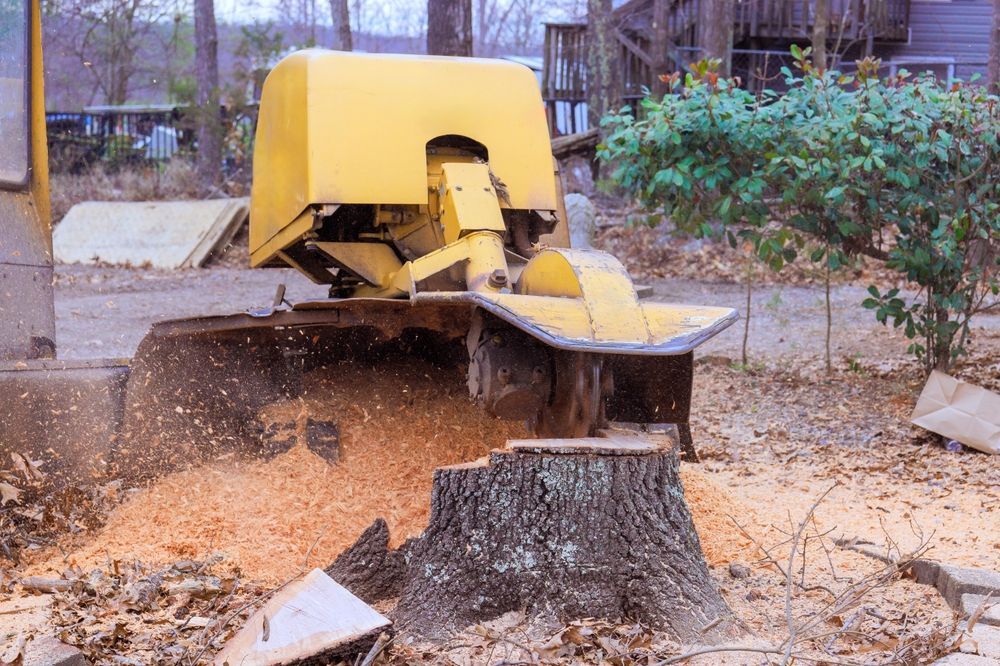
What Proper Stump Grinding Requires on a Residential Lot
Stump grinding is not solely about what the machine can do—it is about what the site allows. Tight residential yards in Jamestown regularly place stumps within a few feet of fences, utility lines, patios, and shed foundations, which determines how the grinder is positioned and how deep it can safely cut. The owner inspects proximity to structures and any known buried utilities before starting, adjusting the machine angle and cutting depth to avoid contact with adjacent materials. True Excavation LLC is in the process of adding a dedicated stump grinder to its equipment lineup, allowing the work to be completed with equipment matched specifically to grinding rather than adapted from other tasks.
After grinding is finished, the stump is gone below the surface level, the void is filled with the chip material that came out of the hole, and the area is raked level. You will not see a protruding root collar or a raised ring around where the stump stood. The filled area can be seeded, sodded, or built over depending on what comes next, though the chips need time to settle and decompose before a solid surface is placed directly above the void.
The scope of cleanup—whether chips are hauled away or raked back into the hole—is worked out before the job starts, since some property owners want the area cleared entirely while others prefer to use the chip material as fill. Those details, along with the depth of grinding needed given the stump's proximity to structures, are confirmed during the
pre-work inspection rather than decided on the fly.
Answers About How Stump Grinding Is Done
The questions below address the grinding process, what determines how the work is approached, and what the finished area looks like once the stump is removed. Stump size, surrounding conditions, and proximity to structures all affect how the job is handled.
What happens during the inspection before grinding starts?
The owner checks how close the stump sits to fences, structures, patios, and any known utility laterals, then determines how the grinder can be positioned and how deep it can safely cut given those constraints. That inspection drives the approach rather than treating every stump the same way regardless of what surrounds it.
How deep does the grinder cut below the surface?
The depth depends on what the property owner plans to do with the area afterward and what the surrounding site allows. Stumps that will be seeded over typically require grinding four to six inches below grade, while those close to structures may be finished shallower to avoid disturbing adjacent foundations or hardscape edges.
Why does the grinding angle matter on a tight lot?
A grinder positioned at the wrong angle relative to a fence or shed can contact those structures during the cutting rotation, which damages both the equipment and the adjacent surface. Reading the stump's position relative to obstructions before starting determines which side the machine approaches from and how the cutting head is swept.
What goes back into the hole after grinding is complete?
The chips produced by grinding—ground wood from the stump and surface roots—are raked back into the void as fill material. They are not structural fill, so the area will settle as the material compacts and decomposes over time. If you plan to build a hard surface over the area, that settling period affects the timing.
How do older residential lots in Jamestown affect where stumps end up relative to utilities?
Properties in older Jamestown neighborhoods often have utility laterals—water, gas, and electric service lines—that were installed without consistent depth standards, and decades of grade changes can leave those lines shallower than their original installation depth. The pre-grind inspection accounts for known utility locations, but the owner confirms burial depth with the property owner before cutting in areas where a lateral is likely to run.
True Excavation LLC also
grinds stumps in Chautauqua County, Falconer, Dunkirk, Westfield, and Olean. To confirm what the grinding scope will involve on your specific lot, connect with the owner directly before scheduling so the site conditions can be reviewed in advance.