
Trenching and Digging Done Without Wrecking the Site
Excavation and trenching in Jamestown for utility lines, ditch digging, and site work on constrained residential lots
Older Jamestown village lots were developed with sidewalks, driveways, and established gardens filling most of the available space, leaving little room for a standard excavator to maneuver without destroying what surrounds it. True Excavation LLC performs residential excavation and trenching in Jamestown with a fleet that includes a mini skid steer for jobs where a full-size machine cannot operate without causing more damage than the excavation itself is meant to fix. The owner operates the machines himself, which means trench routes, machine sizing, and spoil placement are decided by the person doing the work rather than delegated to a crew that was not part of the planning conversation.
Before any trench is opened, the crew confirms the route with the customer, contacts the utility locating service, and selects the machine and attachment that match the access and depth the job requires. The fleet includes trenchers and an excavator in addition to the mini skid steer, so the equipment is scaled to the actual conditions rather than bringing the largest machine and working around it. Spoil is stockpiled where the customer specifies, the trench is cut to the required depth and grade, and the site is cleaned up once the work is finished.
Connect with True Excavation LLC to describe the trench route and access conditions before scheduling excavation work on your property.
What Proper Excavation Requires on a Tight Lot
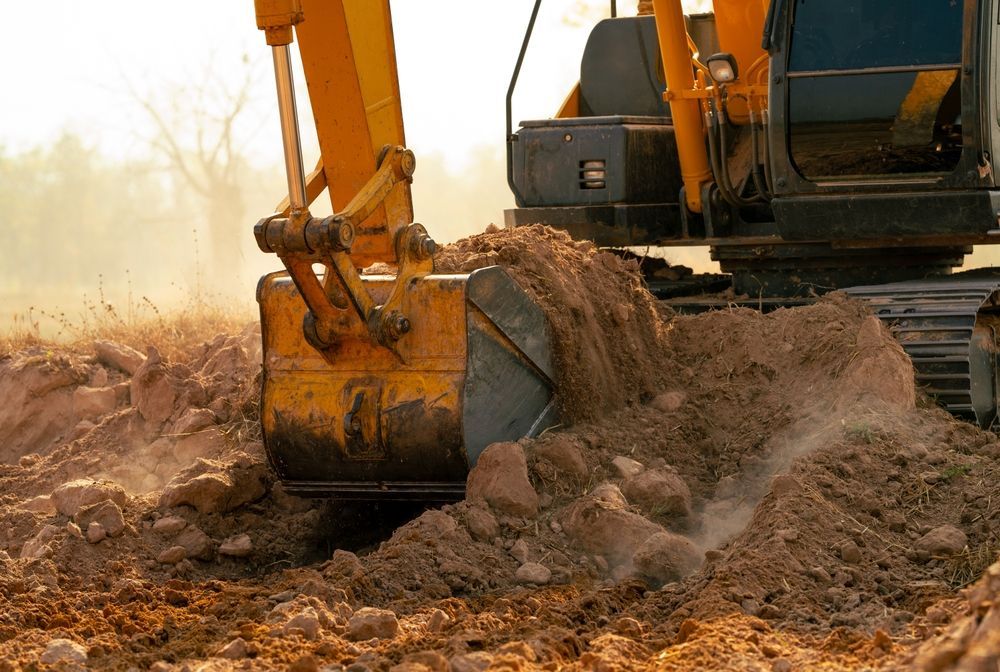
Residential excavation on a constrained lot involves decisions that do not appear on a simple quote: which machine fits the access, how the trench route avoids buried lines and structural foundations, where spoil goes without blocking the work area, and how the cut is sequenced so the trench stays open only as long as necessary. The trench depth and grade are not approximate—utility lines and drainage pipes require a minimum depth and a consistent slope, and those numbers come from the application, not from what is convenient to cut. Getting those details right in the planning stage prevents rework that costs more than the original job.
Once the trench is complete and the work inside it is done, the visible result is a site returned to close approximation of its original condition: spoil is spread or removed, the trench surface is graded, and the path the machine took into the yard is tidied before the crew leaves. A properly cut utility trench also holds its grade rather than sagging in the middle, which matters for drainage pipe slope and for conduit that requires a consistent burial depth along its run.
The variables that affect the scope of excavation work include trench length, the required depth, and the material being cut through—compacted fill, clay, and root-dense soil all behave differently under a trencher or bucket. Those factors determine how the job is sized, and they are assessed on-site rather than estimated from a
property description alone.
Answers About How the Work Is Done
Excavation questions typically involve sequencing, machine selection, and how the work is managed around existing structures and buried infrastructure. The answers below address what actually happens during trenching and
site excavation in Jamestown residential conditions.
How does the crew choose between a trencher and an excavator bucket for a given job?
A trencher cuts a narrow, consistent slot efficiently when the trench run is long and straight, while a bucket is better suited to wider cuts, irregular routes, and situations where material needs to be removed in volume rather than cut in a line.
What happens if the located utility marks are close to the planned trench route?
When buried lines fall within the safe distance of the planned cut, the trench route is adjusted first—if rerouting is not possible, hand digging is used in the area immediately adjacent to the marked line before machine work resumes on either side.
How does working in an established Jamestown yard change the approach to spoil management?
On a lot where the available staging area is limited by fences, driveways, and planted beds, spoil placement is planned before the first pass—piling in the wrong location can block the machine's exit path or force material back into a trench that needs to stay open.
Why does trench grade matter for a utility or drainage application?
A trench cut at an uneven grade causes drainage pipe to hold water at low points instead of moving it to the outlet, and it creates conduit runs that sag in ways that complicate future pulls—grade control during the cut prevents both problems.
What does a finished excavation site look like when the work is done correctly?
Spoil is spread or stockpiled as agreed, the trench surface is graded back to a workable condition, and the access path the machine used is cleaned so that follow-on trades or the homeowner can proceed without clearing the aftermath of the excavation first.
True Excavation LLC also performs excavation and trenching in Chautauqua County, Falconer, Dunkirk, Westfield, and Olean. To discuss the trench route, machine access, and scope of your excavation project, call (716) 489-8043 and set up a site review before work begins.