
Yard Drainage Fixed at the Source of the Problem
Drainage solutions in Jamestown for low corners, pooling yards, and runoff patterns that direct water toward structures
Many Jamestown homes sit on narrow lots where roof runoff from two adjacent structures and the grade of a neighboring yard all converge on the same low corner. The fix in that situation is rarely a single trench—it usually requires regrading the surface to establish a fall away from the structure combined with a buried outlet or a surface swale to carry water clear of the lot. True Excavation LLC walks the site first to identify where water collects, where it needs to go, and which combination of methods will hold that solution over time.
The assessment covers the entire lot grade rather than just the wet spot, because surface water follows the lowest available path and a fix applied only at the symptom point often shifts the problem rather than resolving it. Once the path is mapped, the crew works through regrading, buried pipe to a safe outlet, or a surface swale depending on the conditions. Finished surfaces are graded and seeded or sodded so the corrected grade holds and does not erode back to the original problem.
Set up a site walk with True Excavation LLC to map the full drainage pattern before deciding which approach fits your property.
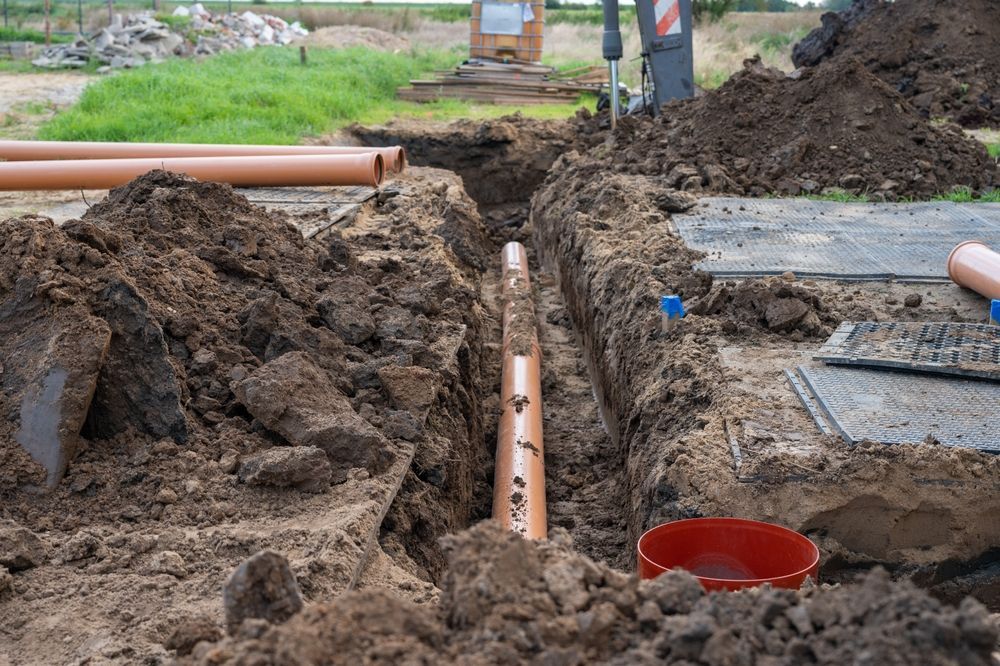
Why Drainage Problems Happen and How to Stop Them
Drainage failure on a residential lot comes down to grade and outlet. Water that moves away from a structure at a consistent fall will not pool there. Water that has no outlet—because a fence, a sidewalk, or a neighbor's lot creates a closed low area—will collect regardless of how level the surface looks. The diagnostic step is identifying whether the problem is insufficient fall, a missing outlet, or a blocked path, because each requires a different fix. Regrading works when the soil surface is close to flat but can be reshaped. A buried pipe works when the surface cannot be reshaped enough or the outlet needs to bypass an obstacle. A swale works when the volume is manageable and there is a legal path to carry it to.
Once the corrected grade and outlet are in place, the low corner that previously held water for days after a heavy event begins shedding normally. The visible change is dry ground where standing water used to sit, along with a surface that clearly falls away from the house rather than toward it.
Seeding or sodding after the grade work is not cosmetic—it holds the corrected surface in place so the first heavy rain does not
wash the new grade into the low spot it was meant to drain. The method chosen depends on the time of year and how quickly the homeowner needs the surface stabilized.
Common Questions About This Service
Drainage work raises questions about sequencing, what each method actually does, and how to tell whether a solution is working once the job is complete. The answers below focus on the decisions involved in the work itself.
Why does a site walk happen before any work is planned?
The low spot where water sits is often not where the drainage path needs to be modified—the problem frequently starts further uphill, and fixing only the wet corner without addressing the source moves the problem rather than ending it.
How does regrading differ from installing a buried drain?
Regrading reshapes the surface so water moves away from the structure on its own, while a buried drain intercepts water that has already reached a low area and moves it underground to an outlet—the two approaches address different points in the water's path.
When is a surface swale the right choice instead of a pipe?
A swale works when there is enough width on the lot to create a shallow channel with a consistent grade and a clear path to an outlet, and when the water volume does not require underground conveyance to manage it.
What does proper finish grading accomplish after drainage work?
Finish grading establishes the slope that directs water away from the foundation and toward the outlet, and it creates the surface on which seeding or sod is placed to lock that corrected grade in place before erosion can undo it.
How do Jamestown lot conditions affect which drainage method is used?
Narrow lot widths, fences close to the property line, and adjacent structures that limit where spoil can be placed all constrain the options—sometimes a buried pipe is the only method that fits the geometry, even when regrading would otherwise be simpler.
True Excavation LLC also provides
drainage solutions in Chautauqua County, Falconer, Dunkirk, Westfield, and Olean. To describe the water pattern you are dealing with and discuss what the lot conditions would require, call (716) 489-8043 and schedule a time to walk the property together.