
Brush and Small Trees Ground Down in Place
Forestry mulching in Jamestown for overgrown lots, fence lines, and back parcels where full tree removal is not warranted
Overgrown back lots and fence lines are a consistent pattern on properties around Jamestown—parcels where brush and small trees have been left alone long enough that clearing feels like a major undertaking. True Excavation LLC does forestry mulching in Jamestown, grinding that overgrowth directly into a ground cover of mulch without hauling a single load off the property. The owner operates the mulching equipment himself, which means the same person making decisions in the field is the one running the machine.
Before mulching begins, the crew walks the boundary of the work area and marks what stays. Brush and small trees are then cleared in passes, with the mulcher reducing material to a ground cover layer as it moves through the site. Anything that cannot be processed by the mulcher—oversized stumps or trees outside the equipment's range—gets flagged before work starts rather than discovered mid-job, so the scope stays predictable. Larger stumps or trees the property owner wants removed separately are quoted on their own line.
Connect with True Excavation LLC to walk through what your lot looks like and get a clear picture of what the mulching pass will cover.
What Forestry Mulching Actually Accomplishes on a Lot
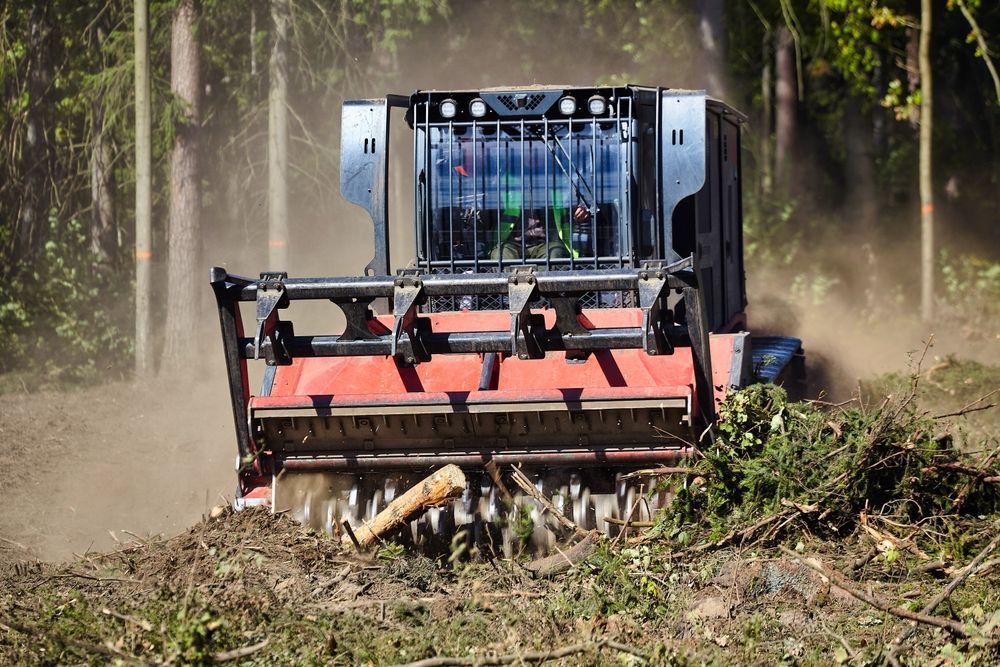
Forestry mulching works differently from conventional brush clearing because the material never leaves the site. The mulching head grinds brush and small-diameter trees into chips and deposits them in place, which eliminates the need for a separate haul-away operation and leaves the ground stabilized rather than bare. For lots around Jamestown where the overgrowth is dense but the underlying ground needs to stay intact, that distinction matters in how quickly the lot becomes usable after the work is done.
After the mulching pass is finished, you will see a visibly cleared area where dense brush stood before, with a layer of wood chip mulch covering the ground rather than exposed soil or piled debris. Fence lines that were buried in growth become accessible, and back lot boundaries that were unclear become readable. The mulch layer left behind also suppresses regrowth in the near term, reducing how quickly the cleared area fills back in.
The distinction between what the mulcher can handle and what falls outside its range is worth understanding before work starts. Small trees and dense brush are the core application. Trees above a certain trunk diameter, or stumps that have significant root mass, are assessed separately and either quoted as an add-on or flagged as out of scope. True Excavation LLC carries brush equipment and bucket attachments in the fleet, which allows the crew to address land clearing conditions that require more than the mulcher alone.
Common Questions About How the Work Gets Done
Property owners in Jamestown and the surrounding area often have practical questions about what the mulching process involves, what stays on the property, and how the crew handles material that falls outside the mulcher's range.
What happens to the mulched material after the machine passes through?
The ground cover of chips stays on-site where it fell—no trucks load it out. That layer serves as a natural ground cover that holds the surface in place and slows regrowth without requiring any additional disposal arrangement.
How does the crew decide what gets mulched versus what gets flagged separately?
During the boundary walk before work starts, the operator assesses trunk diameter and root conditions against what the equipment can process cleanly. Anything outside that range is identified and discussed with the property owner before the machine moves.
What should a property owner do to prepare a lot before the mulching crew arrives?
Marking any buried utilities, irrigation lines, or low fencing that sits within the work area helps the operator avoid them during passes. If the boundary of the clearing zone is not obvious from the property line, flagging it before arrival keeps the crew on the correct section of the lot.
Why does forestry mulching cost less than conventional brush removal on comparable lots in Chautauqua County?
The savings come from eliminating a separate haul-away operation. When material is ground in place rather than loaded and trucked off, the overall job requires fewer machine moves and no disposal fees, which reduces the total cost relative to a cut-and-haul approach on the same area.
How do you recognize quality work once a forestry mulching job is finished?
A well-run mulching pass leaves a consistent chip layer without large unprocessed pieces scattered across the surface. The cleared boundary should match what was agreed upon during the walk, with no trees or shrubs inside the zone left standing, and nothing outside the zone disturbed.
True Excavation LLC also performs
forestry mulching in Falconer, Dunkirk, Westfield, and Olean. To get a ground-level assessment of your lot and a straightforward scope of what the mulching pass will include, call True Excavation LLC at (716) 489-8043 and arrange a site walk before the work is scheduled.