
Yards That Move Water Away from the House
Grading in Jamestown for low spots, pooling water, and uneven ground around the foundation
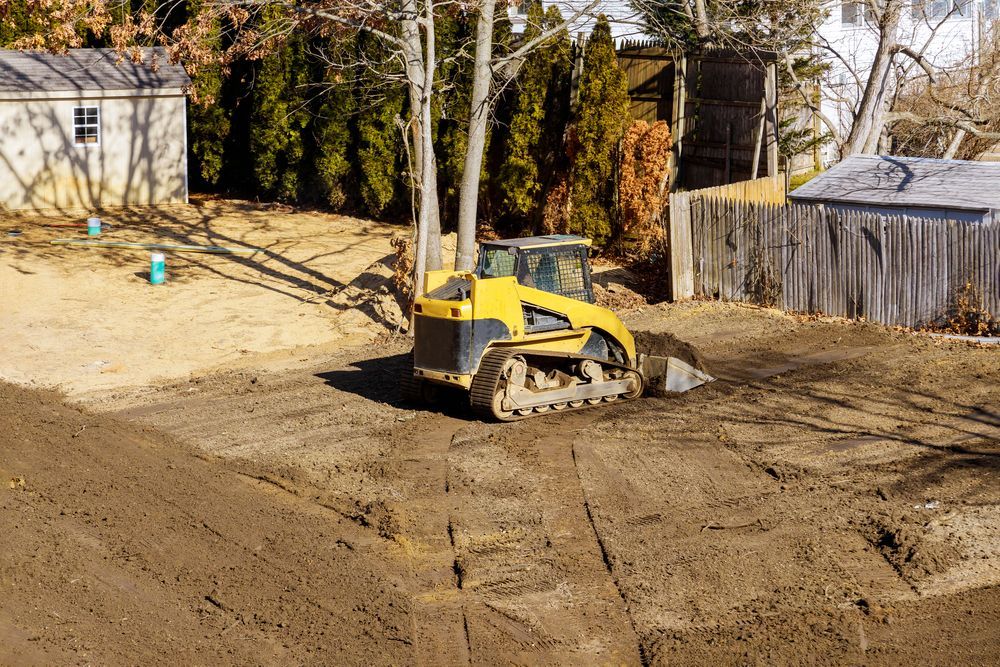
True Excavation LLC grades residential yards and lots in Jamestown, NY, directing runoff away from foundations and leveling ground that has settled or eroded over time. The owner handles every job himself, operating a mini skid steer sized for the narrow backyards and tight village lots common throughout this area. Homeowners who notice water collecting against the house after rain, or ground that has settled unevenly beside a walkway or garage pad, are the clients this work is built for.
The process starts with the owner walking the lot and reading where water currently travels—identifying low spots, high crowns, and any grade that slopes toward the foundation rather than away from it. From that walkthrough, he sets finish grades that carry runoff toward the yard perimeter or a designated drainage point. The mini skid steer handles the bulk of the material movement, and the owner finishes areas the machine cannot access by hand, so no corner of the lot gets left at an angle that sends water back toward the structure.
Arrange a lot walkthrough with True Excavation LLC to identify exactly where the grade needs correction on your property.
What Changes Once the Grade Is Set Correctly
Grading is not simply moving dirt—it requires reading how a finished surface will carry water across its full length, accounting for where adjacent paving, fencing, or structures interrupt natural flow. Because the owner walks every lot himself before operating the equipment, the grade decisions are made by the same person running the skid steer, not relayed through a crew. That continuity matters on older Jamestown residential lots, where settled soil, patched areas, and side-yard obstructions can shift the plan between the initial survey and the finish pass.
After grading is complete, the visible change is straightforward: the yard surface slopes consistently away from the house, low spots that held standing water are filled and blended, and the transition from the lawn to any hard surface reads as a smooth, intentional grade rather than an abrupt edge or dip. The surface the owner hand-finishes in tight areas blends with the machine-graded sections so there is no ridge or step where the two methods meet.
The scope of a grading job is determined by how far the corrected grade needs to run from the foundation, whether any material has to be imported or removed, and how much hand finishing the perimeter conditions require. Those factors are worked out during the lot walkthrough rather than assumed upfront.
What Property Owners Ask About Grading Work
The questions below address how yard grading is actually performed and what drives the decisions made on site. Equipment size, lot conditions, and access all shape the approach on any given property.
What does the owner look for when walking the lot before grading begins?
The walkthrough identifies where water currently pools or flows toward the structure, where the ground has settled below the surrounding grade, and whether any buried obstacles or utility lines will affect machine positioning. Those observations determine where material gets moved and how the finish slope is set.
How does a mini skid steer change the way grading is done on a tight residential lot?
A full-size machine cannot enter most side yards or work close to fences and sheds without damaging them, so grading gets roughed in from a distance rather than finished at grade. The mini skid steer used by True Excavation LLC fits through standard gate openings and can work within a few feet of structures, which means the finish grade extends all the way to the perimeter rather than stopping where a larger machine would have to stop.
What happens in areas the machine cannot physically reach?
The owner hand-finishes those sections using rakes and hand tools, blending the surface into the machine-graded area so the slope is consistent without a visible seam or ridge at the boundary.
How do you tell whether a yard has a grading problem versus a drainage problem caused by something else?
If water pools away from any structure and does not recede within a normal timeframe, the issue may be soil compaction or a low spot rather than a slope problem. If water consistently migrates toward the foundation or collects against a wall, the grade itself is almost certainly directing flow the wrong way, and leveling the surface alone will not fix it without resetting the slope.
What should the yard surface look like when grading is finished?
Jamestown residential lots with correct finish grades show a consistent slope away from the foundation across the full width of the yard, with no visible dips or crown lines where material was added or cut. Transitions to existing paving, steps, or fencing read as smooth rather than abrupt, and any hand-finished areas match the surrounding grade without a raised edge.
True Excavation LLC also performs
grading in Chautauqua County, Falconer, Dunkirk, Westfield, and Olean. To discuss your specific lot conditions and what the finish grade would need to accomplish, contact the owner directly to set up a property walkthrough before committing to a scope of work.