
Overgrown Lots Cleared Back to Usable Ground
Brush clearing in Jamestown for fence lines, rear yards, and narrow access areas reclaimed from heavy growth
Fence lines swallowed by sumac, garage rears boxed in by bramble, and side yards where a full-size machine simply cannot fit—these are the conditions True Excavation LLC handles with brush clearing work in Jamestown. The owner operates the brush equipment himself on each job, which means the person assessing the growth and the person cutting it are the same individual. That matters when access is tight and the boundary between what gets cleared and what stays requires a judgment call made on the ground.
The process starts with the owner walking the lot to assess the density of the growth, the access route, and the best direction to work. Cutting moves from the boundary inward using brush equipment and buckets sized to fit constrained spaces. Cut material is either hauled away or chipped depending on volume, so the lot is left clear rather than piled. Jamestown lots commonly have brush growing along old fence lines and behind garages where a full-size machine cannot operate, which is why compact equipment drives the approach here.
Call True Excavation LLC directly to describe your lot and arrange an on-site look at the growth before any work begins.
How the Clearing Work Is Done Correctly
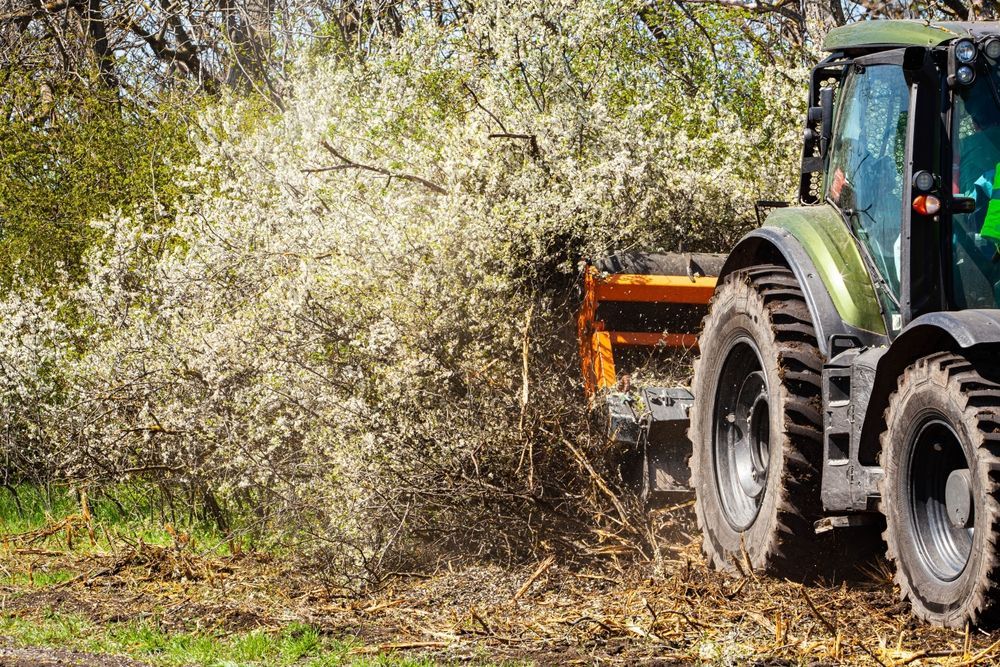
Brush clearing is not simply running a machine across open ground. When growth has established along a fence line or behind a structure, the operator has to work with a specific sequence: identify what is rooted versus what is layered debris, establish the access path without damaging existing structures, and cut progressively so the machine is never pushing material it cannot see past. The owner uses brush equipment and buckets together, which allows the work to move debris as it is cut rather than compacting it into a pile the machine then has to fight through.
Once the clearing is finished, the lot boundary becomes visible again—fence posts that were buried in growth, property corners that could not be seen, and ground that can now be assessed for what comes next, whether that is grading, seeding, or a new fence installation. The absence of accumulated debris along the structure line is the most immediate change a property owner will notice.
Disposal method depends on the volume and character of the material cut. Light brush and small-diameter growth is typically chipped and manageable on-site, while heavier material from established woody growth may require hauling. The owner confirms the disposal plan before work starts so there are no questions about what leaves the property.
What Property Owners Ask About Brush Clearing
Brush clearing questions often come down to access, what happens to the cut material, and how the boundary between cleared and uncleared area is managed. These answers cover the most common points about how the work is actually done.
What equipment is used when a back yard or side yard is too tight for a standard machine?
Compact brush equipment and buckets are used specifically for constrained lots, allowing the operator to cut and move material in spaces a larger rig could not enter without damaging fences or structures.
How does the operator decide where to start the cut?
The owner walks the lot first to identify the access route, the density of the growth, and the direction that lets the machine work inward without trapping itself or pushing debris against a structure.
What happens to the brush and cut material once it is cleared?
Cut material is either chipped on-site or hauled away depending on volume and the type of growth involved, and that decision is confirmed before the job starts.
How does clearing along a property line differ from clearing open ground?
Along a fence line or property boundary in a Jamestown lot, the operator has to account for what is on both sides—existing posts, neighboring structures, and utility lines that may run close to the line—so the approach is slower and more deliberate than open-field work.
What does the cleared area look like when the work is finished?
Ground that was completely obscured by growth becomes visible, fence lines and property corners reappear, and the surface can be evaluated for follow-on work like grading or seeding.
True Excavation LLC also performs
brush clearing in Falconer, Chautauqua County, Dunkirk, Westfield, and Olean. To discuss your specific lot, the growth involved, and what access looks like on your property, contact the owner at (716) 489-8043 and set up a time to walk the site together.