
Ground Cleared and Cut Before Any Base Goes In
Site preparation in Jamestown for building pads and driveways where buried debris and old fill complicate the subgrade
Infill lots and older neighborhood parcels throughout Jamestown frequently contain what was never meant to stay—old root systems from removed trees, fill from previous demolitions, and buried debris that accumulated before the lot sat vacant. None of that material provides a stable subgrade for a new building pad or driveway base, and discovering it partway through a pour is far more disruptive than removing it first. True Excavation LLC handles site preparation in Jamestown by stripping organic topsoil, clearing subsurface debris, and cutting the subgrade to a design elevation that drains correctly before any base material arrives. The owner operates the equipment on every job himself, keeping one person accountable from the initial clearing pass through the finish grade.
Work begins with clearing surface vegetation, then stripping the organic topsoil layer entirely—because topsoil compresses and breaks down, leaving it under a pad or driveway guarantees settlement over time. Once the organic layer is off, the owner cuts the pad or driveway footprint to the required elevation and grades the exposed subgrade so it drains away from the intended structure. The mini skid steer and trenching setup used by True Excavation LLC fit the size and access constraints of residential sites where a full-size excavator would be difficult to maneuver. Material hauling and final compaction are quoted separately, since the volume and destination of spoils vary by lot.
Set up a site visit with True Excavation LLC to review the lot conditions and determine what the subgrade preparation will require for your specific project.
How Site Preparation Addresses What's Under the Surface
The difference between a site that holds its base and one that shifts within a few years often comes down to what was removed before the base went in. On older Jamestown lots, the subgrade is rarely predictable: previous owners may have filled low spots with whatever was available, tree removals leave voids as root systems decay, and demolition rubble sometimes sits just below the topsoil layer. Because the owner walks each property himself before any machine moves, he identifies these conditions during the site assessment rather than uncovering them mid-job. That front-loaded evaluation shapes how the clearing and cutting sequence is planned.
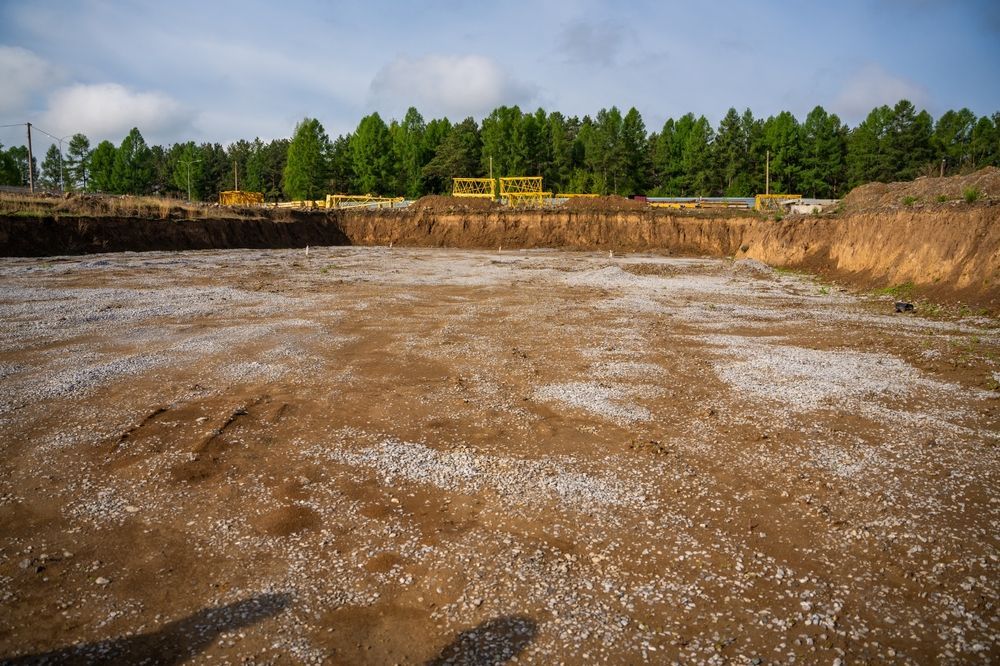
When site preparation is finished, what you see is a stable, graded subgrade at the correct elevation with consistent slope for drainage, clear of organic material and buried debris. There are no soft spots that deflect underfoot, the surface reads as uniform in texture and elevation, and the footprint matches the design dimensions. That finished subgrade is what allows the base material layer to be installed consistently rather than compensating for variations left by incomplete prep.
Site preparation scope depends on what the lot currently holds and what the finished project requires. A driveway cut on a relatively clean lot takes a different approach than a building pad on an infill parcel with unknown fill history. Those distinctions are established during the owner's walkthrough, where the clearing sequence and subgrade depth are confirmed before work begins.
Questions About How Site Prep Works
The questions below focus on the preparation process itself—what happens in sequence, what the subgrade must accomplish, and what older Jamestown lots typically require before a stable base can be built.
Why does topsoil have to come off before a base is installed?
Topsoil is organic material that compresses under load and continues to break down after burial. Leaving it under a driveway or building pad creates a layer that settles unevenly as the organic matter decompresses, which causes cracking and shifting in whatever surface is installed above it.
How does the subgrade get cut to the right elevation and slope?
The owner sets the target elevation based on the finished surface height and the required base depth, then cuts down to that level with the skid steer, reading the grade as the machine works. The finished subgrade carries a deliberate slope so that water moves off the surface rather than collecting under the base material.
What does buried debris or old fill mean for how the work is sequenced?
Material that cannot form a stable subgrade has to come out before grading begins, which sometimes extends the clearing phase when debris runs deeper than the initial surface indicated. In Jamestown, infill lots and older parcels can carry fill from multiple prior uses, so the owner assesses depth during the walkthrough to build that reality into the scope rather than treating it as an unexpected add-on.
What is and is not included in standard site preparation?
Clearing vegetation, stripping topsoil, cutting to design elevation, and grading the subgrade for drainage are the core scope. Hauling spoils off site and final compaction of the subgrade are typically quoted separately because the volume of material and the compaction method depend on what the finished project requires.
How do you confirm the subgrade is ready for base material to go in?
A properly prepared subgrade is firm and uniform underfoot with no visible soft spots or organic material, holds the design elevation consistently across the footprint, and has a grade that visibly slopes away from the structure. Those are the observable checks that indicate the subgrade is ready to receive base material rather than needing additional correction.
True Excavation LLC also performs site preparation in Chautauqua County, Falconer, Dunkirk, Westfield, and Olean. To talk through what your lot will require and confirm the scope directly with the owner, call (716) 489-8043 and schedule a site visit before the project timeline begins.