
Standing Water Routed Away From Structures
French drain installation in Jamestown for yards and foundations where water collects along sidewalks, side yards, and foundation walls
Older village lots in Jamestown were platted narrow, and the combination of foundations close to the property line, concrete sidewalks along the frontage, and minimal grade change between neighbors creates a situation where surface water has nowhere to go but down—against a foundation wall or into a basement window well. True Excavation LLC installs French drains in Jamestown to give that water a defined path to a safe outlet, resolving the problem at the source rather than managing it with sump pumps alone. The crew recently completed a 140-foot French drain alongside land leveling on a residential job, which reflects the scale of work these lots sometimes require.
Before any trench is cut, utilities and sidewalk lines are marked so the route avoids buried infrastructure. The trench is cut to the run and slope the system requires, perforated pipe is set on a sloped bed, wrapped in filter fabric, and surrounded by clean stone before the surface is backfilled and graded back. A mini skid steer handles access in tight side yards and along narrow passages where a full-size machine would destroy the lawn or walkway it is trying to protect.
Arrange a site visit with True Excavation LLC to map the water path on your property before any trench layout is drawn.
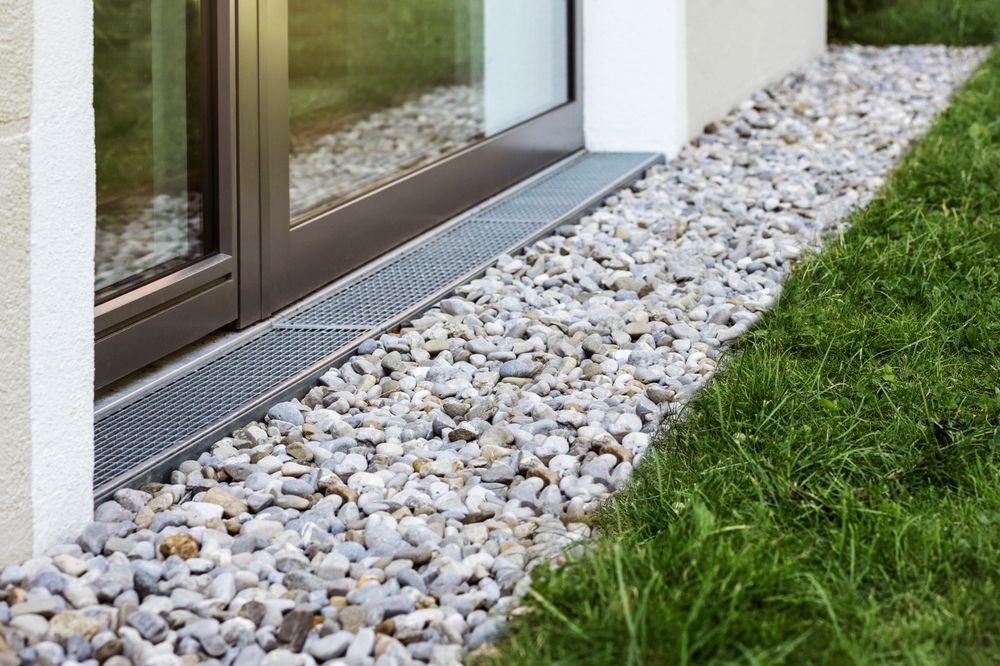
What French Drain Installation Actually Accomplishes
A French drain works by intercepting water at the point where it collects and moving it underground to a lower outlet—typically a daylight point at the lot edge, a dry well, or a storm connection where permitted. The filter fabric wrapping the pipe prevents fine soil particles from migrating into the stone bed and blocking flow over time, which is the most common failure point in systems installed without it. The slope of the trench bottom determines whether the system drains completely or holds a low section where sediment accumulates, so grade control during installation is not optional.
After installation, the area where water previously pooled along the foundation or fence line dries between events rather than staying saturated. Basement wall dampness tied to surface pooling typically decreases once surface water is intercepted before it reaches the foundation. The backfilled trench line settles to grade and becomes largely invisible once grass re-establishes.
French drains address surface and shallow subsurface water movement. They are not a substitute for waterproofing membranes on a foundation wall or for interior drainage systems when water is entering through the wall itself. The site assessment determines which approach the conditions actually call for, and sometimes both are needed in sequence.
Answers About How the Work Is Done
French drain questions typically center on what is buried in the trench, how the pipe slope is managed, and what distinguishes a system that lasts from one that clogs within a few years. The answers below address the installation process directly.
What is actually inside a French drain trench?
The trench contains a bed of clean angular stone surrounding a perforated pipe, with filter fabric wrapped around the stone to keep soil out of the aggregate while still allowing water to enter freely.
How is the pipe slope set during installation?
The trench bottom is graded to a consistent fall—typically at least one percent—so water moves toward the outlet continuously rather than sitting in low pockets where sediment collects and clogs the pipe.
Why does utility marking happen before the trench is cut?
Jamestown lots have buried gas, water, and electric lines that do not always run where the original plan shows, so marking before digging protects both the crew and the homeowner from a service interruption or damage claim.
How does a mini skid steer change the installation on a narrow lot?
The machine fits through standard fence gates and along side yards as tight as three feet wide, which means the trench can be cut where the water problem actually is rather than where a large machine could reach.
What should the surface look like when the installation is finished?
The trench is backfilled and graded flush with the surrounding grade, with the pipe outlet visible at the daylight point or cleanout so the system can be checked or flushed later if needed.
True Excavation LLC also
installs French drains in Falconer, Chautauqua County, Dunkirk, Westfield, and Olean. To discuss the water pattern on your property and what a French drain system would involve on your specific lot, call (716) 489-8043 to set up a site visit with the crew.