
Overgrowth Removed So the Ground Is Usable Again
Land clearing in Jamestown for brush, small trees, and overgrowth on village lots and larger rural parcels
A Jamestown property that has been left unmanaged long enough stops functioning as usable land—brush fills side yards, small trees claim fence lines, and the back lot becomes inaccessible. True Excavation LLC clears land in Jamestown, NY, removing brush, small trees, and overgrowth to open ground for yards, building sites, and access routes. Jamestown properties range from compact village lots with tight clearance to larger parcels on the rural edge of town, and the clearing method changes with the scale and access of the site. The owner selects and operates the equipment himself for every job, matching the machine to what the growth and lot size actually require.
Work begins with the owner walking the property to mark what stays and what goes—identifying trees to preserve, property boundaries, and any structures or utilities that define where equipment can operate. Clearing then proceeds with a commercial zero turn, brush equipment, and buckets suited to the density and type of growth on that specific lot. Debris is either hauled off or chipped depending on the volume and what the property owner wants done with the material. Disposal method and pricing are confirmed directly with the owner before work starts, since the approach to debris varies significantly between a small overgrown side yard and a half-acre rural parcel.
Arrange a property walkthrough with True Excavation LLC to identify what needs to come out and what the most efficient clearing sequence would be for your lot.
The Difference Between Surface Clearing and Full Site Opening
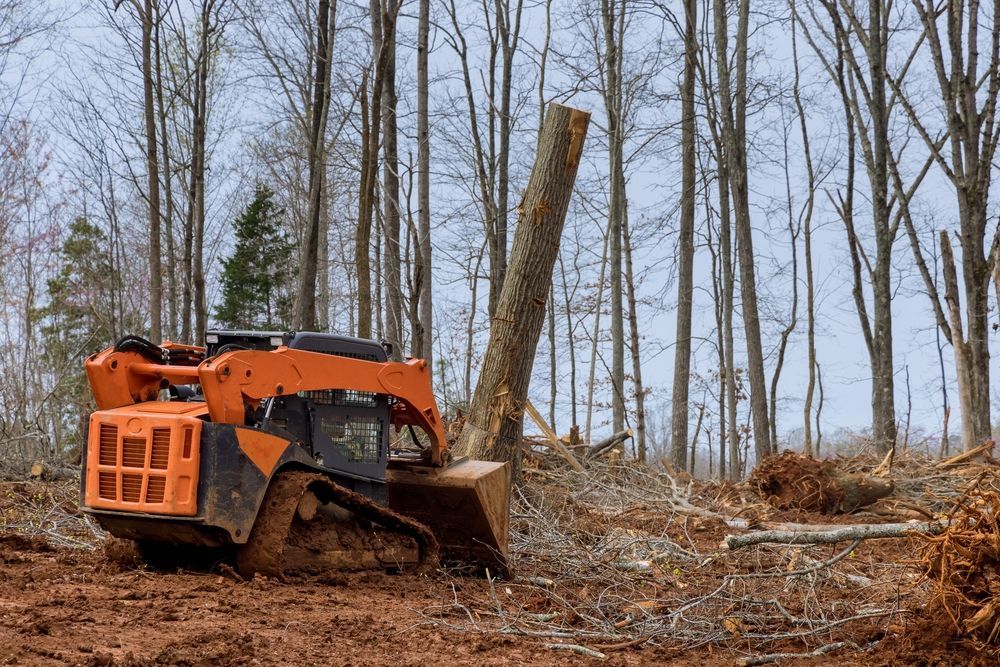
Clearing a property is not a single task—it involves sequencing equipment so that what is cut is accessible for removal before the next pass begins. True Excavation LLC approaches larger lots by moving through sections, which keeps cleared material from being compacted back into the ground by subsequent equipment passes and makes progress visible as the job advances. On smaller village lots, the commercial zero turn and brush equipment allow clearing close to fences, existing plantings, and structures without requiring heavy equipment access that the lot cannot physically accommodate. The equipment inventory—including trailers, trenchers, brush equipment, and buckets—means the right tool is used for the growth present rather than forcing one machine type through every condition.
When clearing is finished, the observable change is direct: ground that was inaccessible or visually closed in is open and walkable, fences and property lines are visible again, and the cleared area has a defined edge rather than an overgrown boundary that blurs into adjacent properties. Brush that had been encroaching on structures or hardscape is gone, and the remaining ground is ready for whatever comes next—grading, seeding, building, or regular maintenance.
What clearing includes versus what requires additional scope depends on the growth type, the volume of debris, and where material needs to go. Chipping debris on site is one option; hauling it off is another. Properties with large-diameter stumps left after tree removal may require
stump grinding as a separate step before the ground can be considered fully cleared at grade level.
What Owners Ask About Land Clearing
The questions below address how clearing work is sequenced, what drives equipment decisions, and what a finished cleared lot looks like. The size and access conditions of Jamestown properties—from dense village lots to open rural parcels—shape every answer here.
How does the owner decide which equipment to use for a given clearing job?
The commercial zero turn and brush equipment are suited to dense, lower-growth clearing in areas where a larger machine would compact the soil or cannot fit. Buckets and heavier equipment come in for larger material removal or where root systems need to be pulled rather than just cut. The walkthrough before work begins is where that selection gets made based on what the property actually contains.
What happens to debris and brush after it is cut?
Debris is either chipped on site or loaded and hauled off depending on the volume and the property owner's preference. Those options are not interchangeable in cost or logistics, so the method is confirmed during the estimate conversation rather than decided after the material is already on the ground.
How is the clearing boundary set so that plants and trees the owner wants to keep are not damaged?
The owner marks what stays during the pre-work walkthrough, establishing a clear line before any equipment moves. That boundary is referenced throughout the job, particularly when brush equipment is working close to the edge of areas that are being kept.
What does a fully cleared lot look like when the work is done versus a lot that was only partially cleared?
A fully cleared lot has open, walkable ground across the entire footprint with no standing brush or cut material remaining at grade. A partial clearing often leaves cut stems at ground level that resprout within a season and debris that decomposes slowly if not removed, which means the lot appears cleared temporarily but requires retreatment within one to two years.
Do stumps left after clearing need to be handled separately?
Stumps that remain after trees are cut are not addressed by clearing equipment alone—they require dedicated grinding to bring them below grade. If grading or building is planned after clearing, those stumps must come out before subgrade work can be done accurately, since the root mass creates voids as it decomposes and prevents a stable, uniform grade from being achieved.
True Excavation LLC also clears land in Chautauqua County, Falconer, Dunkirk, Westfield, and Olean. To talk through the specific conditions on your property and confirm what the clearing scope will include, contact the owner directly to schedule a walkthrough before any equipment is committed to the job.